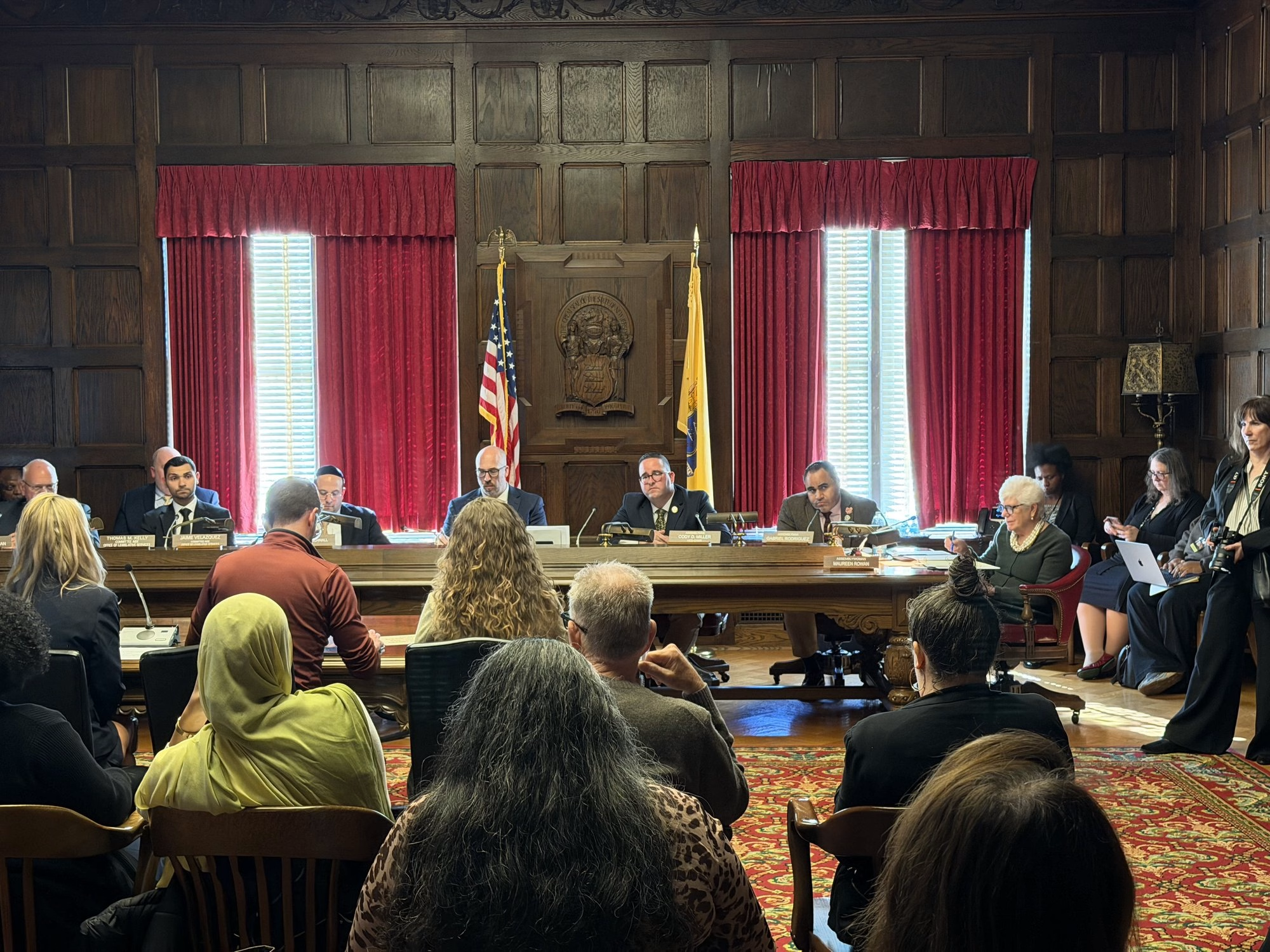
Assemblywoman Maureen Rowan joined fellow members of the Assembly Oversight, Reform and Federal Relations Committee on Thursday, October 22, for a public hearing examining how New Jersey counties and municipalities are using National Opioid Settlement funds.
The nearly three-hour hearing drew a standing-room-only crowd at the State House Annex in Trenton, where community advocates, local officials and families affected by the opioid crisis shared testimony about the need for greater transparency, accountability and support for addiction prevention, treatment and recovery.
New Jersey and its local governments are expected to receive more than $1.1 billion through 2038 from settlements with opioid manufacturers, distributors and retailers. Half of those funds go to the State, while the remaining half is distributed directly to 262 local government entities, including all 21 counties.
Community Voices Highlight the Need for Greater Accountability
Representatives from the Newark Community Street Team, Black Lives Matter Paterson, the New Jersey Harm Reduction Coalition and Salvation and Social Justice were among those who testified.
Several speakers shared personal experiences with addiction and overdose, including the loss and hardship experienced by their families and communities. Their testimony underscored the importance of directing settlement resources to organizations providing prevention, treatment, recovery and family support.
The hearing also revealed gaps in coordination between local governments and public health professionals. The New Jersey Association of County and City Health Officials reported that, among 25 local health departments surveyed, more than half had not been consulted when their municipalities made decisions about spending settlement funds.
Some mayors and county administrators also expressed interest in receiving clearer State guidance and examples of appropriate uses for the funding.
In Atlantic County, the county government’s FY2026 opioid abatement report shows that approximately $7.18 million in settlement funds has been received since distributions began in 2022. Of that amount, approximately $5.06 million remains unspent and uncommitted.
These figures highlight the importance of careful planning, coordination and timely investment in communities affected by the opioid crisis.
A5588 Would Strengthen Oversight and Guidance
Assemblywoman Rowan is a prime sponsor of Assembly Bill A5588, alongside Assemblyman Cody Miller and Committee Chair Avi Schnall.
As introduced, the legislation would establish additional requirements to help ensure opioid settlement funds are used appropriately and within a reasonable timeframe.
The bill would:
- Require settlement funds to be spent within 18 months of receipt, with exceptions for approved multi-year projects. Unspent funds would require an approved extension or be returned for redistribution.
- Require funds used for purposes prohibited by law to be repaid within 60 days of a finding of misuse, with the option to request an extension.
- Direct the State’s Opioid Recovery and Remediation Advisory Council to develop training on approved uses of settlement funds and establish a formal process for counties and municipalities to request guidance.
- Require the Department of Human Services and local governments receiving settlement funds to provide a link to the State Comptroller’s online fraud, waste and abuse reporting form.
The committee did not vote on A5588 during the hearing. Chair Schnall indicated that members wanted to hear from all sides and would use the testimony to help improve the legislation before moving forward.
Keeping Communities at the Center of Opioid Recovery
New Jersey has seen a decline in overdose deaths, from 3,171 confirmed drug deaths in 2022 to just under 800 suspected drug deaths reported so far in 2026. While this progress is encouraging, the opioid crisis continues to affect individuals and families throughout the State.
For Assemblywoman Rowan, responsible use of settlement funds requires transparency, careful planning and stronger coordination between municipal and county governments. Clearer State guidance can help local officials make informed decisions, while greater engagement with community organizations can ensure resources address the needs of those most affected.
The organizations working directly with individuals and families need a stronger voice in funding decisions and greater access to resources for prevention, treatment, recovery and family support.
Assemblywoman Rowan extends her appreciation to everyone who testified, particularly those who shared difficult personal and family experiences, and to those who remained throughout the lengthy hearing to ensure their voices were heard.
Behind every statistic is a person, a family and a community. Their experiences must remain central to how New Jersey invests these settlement funds.
Read More
- New Jersey Monitor: Harm reduction workers demand oversight of opioid settlement fund spending
- New Jersey Assembly Bill A5588: Full Bill Text
- New Jersey Office of the State Comptroller: National Opioid Settlement Funds